Rick Visser
Rick Visser es Licenciado en Biología por la Universidad de Málaga (UMA). Inicialmente se incorporó al Área de Fisiología Animal de la Facultad de Ciencias de la UMA, en el grupo liderado por el Dr. Pedro Fernández-Llébrez, dedicado al estudio de la neurogénesis en el adulto. Esta relación se mantiene aun actualmente de forma puntual. En el año 2002 se incorporó al Laboratorio de Bioingeniería y Regeneración Tisular (LABRET-UMA) del Dr. José Becerra en el departamento de Biología Celular, Genética y Fisiología, centrado en el campo de la ingeniería tisular del tejido óseo y cartilaginoso. Aquí comenzó a especializarse en la producción de proteínas recombinantes en sistemas de expresión tanto procarióticos como eucarióticos tras una estancia de cuatro meses en el Centro Nacional de Biotecnología Alemán (GBF) en Braunschweig, Alemania. Financiado por una beca predoctoral de FPU del Ministerio de Educación y Ciencia, Rick Visser obtuvo el grado de Doctor con mención europea en 2009. Actualmente continúa trabajando como investigador posdoctoral en el grupo del Dr. Becerra integrado en BIONAND en el área de Nanobiotecnología, y centrado en el desarrollo y caracterización de herramientas moleculares para medicina regenerativa de tejido óseo.
English version.
Rick Visser graduated at the University of Málaga (UMA) with a degree in Biology. Initially he started his research activity in the Animal Physiology area at the Faculty of Science of the UMA, in the group led by Dr. Pedro Fernández-Llébrez, dedicated to the study of postnatal neurogenesis. This relation continues nowadays through occasional collaborations. In 2002 he became a member of the Laboratory for Bioengineering and Tissue Regeneration (LABRET-UMA), headed by Dr. José Becerra from the Department of Cell Biology, Genetics and Physiology, and focused on the field of bone and cartilage tissue engineering. Here he started to specialize in the production of recombinant proteins in both prokaryotic and eukaryotic expression systems after a four-month stay at the German Research Center for Biotechnology (GBF), in Braunschweig. With finance from a predoctoral grant from the Spanish Ministry of Education and Science, Rick Visser obtained his European PhD degree in 2009. Today he continues his work as a postdoctoral researcher in Dr. Becerra’s group, which is integrated in BIONAND in the Nanobiotechnology area, and focused on the development and characterization of new molecular tools for bone tissue regenerative medicine.
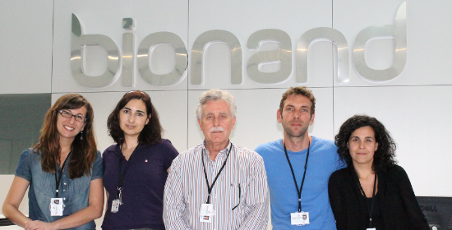
 Dr. José Becerra Ratia